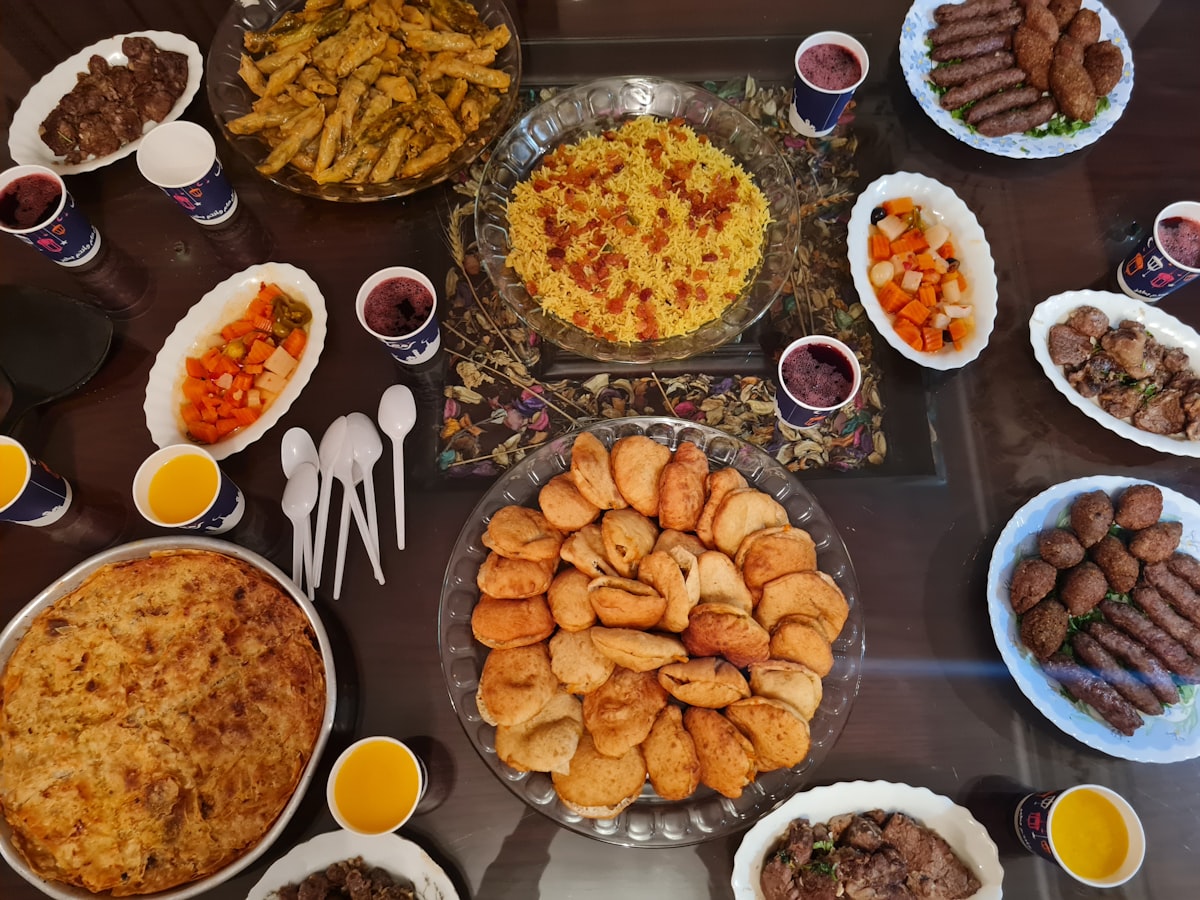
A generous spread of traditional Caucasus dishes laid across a shared table

Azerbaijani Kitchen Journal

Azerbaijani Cooking Without Vegetable Oil

Recipes from the Caucasus foothills, cooked the way our grandmothers cooked them: in sarı yağ, in tallow, in good olive oil pressed in the mountains. Never a drop of processed seed oil.

01

Ocaq First

Everything begins at the ocaq, the open hearth. Long, slow, low heat is what turns lamb, rice, and vegetables into something worth gathering around, not a shortcut with processed oil.

02

Sarı Yağ Rules

Sarı yağ, clarified golden butter, is the backbone of a Caucasus pot. It carries the saffron, it crisps the qazmaq crust, and it never hides behind a neutral, flavorless oil.

03

Never Vegetable Oil

Lamb tallow for dolma, ghee for plov, cold pressed olive oil for the mountain villages that grow it. Industrial seed oil has no place on this table and never will.

From Our Table

Six Dishes From The Caucasus Table

A working set of recipes we return to again and again: a crowning rice dish, a coastal stuffed bird, a soup of tiny dumplings, a pot of vegetables gone soft with butter, everyday flatbread, and the pastry that marks the new year. Tap any card to open the full recipe.

Ingredients

  • 3 cups basmati rice, soaked 2 hours
  • 2 lb bone in lamb shoulder, cut into chunks
  • 1 cup sarı yağ (clarified butter), divided
  • 1 pinch saffron threads, bloomed in warm water
  • 1 large onion, sliced
  • 1/2 cup dried apricots
  • 1/3 cup dried barberries or dried cranberries
  • 1/2 cup peeled chestnuts
  • 2 thin sheets lavash or 2 pieces pita, for the crust
  • 1 egg yolk, salt, ground cinnamon

Method

  1. Braise the lamb slowly in a covered pot with the onion, salt, and a splash of water until the meat pulls apart easily, about 1 hour.
  2. Parboil the soaked rice in heavily salted water for 5 to 6 minutes until just past raw, then drain.
  3. Whisk the egg yolk with a spoonful of yogurt and brush it over the lavash to line the bottom of a heavy pot, this becomes the qazmaq crust.
  4. Layer half the parboiled rice over the crust, dot with butter, then add the braised lamb, apricots, barberries, and chestnuts.
  5. Cover with the remaining rice, pour over the bloomed saffron butter in a spiral, and dot the top with the rest of the sarı yağ.
  6. Wrap the lid in a clean cloth, cover the pot tightly, and steam over the lowest possible heat for 40 to 45 minutes.
  7. Rest for 5 minutes off the heat, then invert onto a large platter so the golden qazmaq crust ends up on top.

Ingredients

  • 1 whole chicken, about 4 lb (or 2 lb firm white fish)
  • 2 cups walnuts, toasted and finely ground
  • 1 large onion, finely chopped
  • 1/2 cup dried sour plums (alycha) or dried apricots, chopped
  • 1/4 cup pomegranate molasses (narşərab)
  • 4 tbsp sarı yağ (clarified butter)
  • 3 garlic cloves, minced
  • 1 tsp ground coriander
  • Salt and black pepper
  • Fresh pomegranate seeds, for serving

Method

  1. Melt half the butter and sweat the onion and garlic until soft and translucent, about 8 minutes.
  2. Stir in the ground walnuts, chopped sour plums, coriander, salt, and pepper, cooking gently until fragrant.
  3. Season the chicken cavity with salt, then pack it generously with the walnut filling and close with a skewer or kitchen string.
  4. Sear the chicken in the remaining butter in a heavy pot until the skin is golden on all sides.
  5. Add a splash of water, cover, and roast or braise low and slow until the juices run clear, basting every 20 minutes.
  6. In the last 10 minutes, brush generously with pomegranate molasses so it lacquers the skin.
  7. Rest for 10 minutes, carve, and spoon the walnut filling alongside, scattered with fresh pomegranate seeds.

Ingredients

  • 2 cups flour, plus more for dusting
  • 1 egg
  • 1/2 cup cold water
  • 1/2 tsp salt
  • 1/2 lb ground beef or lamb
  • 1 small onion, grated
  • 2 lb beef bones, for broth
  • 1 cup whole milk yogurt
  • 3 garlic cloves, crushed
  • 2 tbsp sarı yağ (clarified butter) and dried mint, to finish

Method

  1. Simmer the beef bones in salted water for 1 hour, skimming often, to make a clear broth. Strain and set aside.
  2. Mix flour, egg, water, and salt into a firm dough. Knead until smooth, then rest covered for 20 minutes.
  3. Combine the ground meat with the grated onion, salt, and pepper for the filling.
  4. Roll the dough as thin as possible and cut into small squares, about the size of a postage stamp.
  5. Place a tiny amount of filling in the center of each square, fold into a triangle, and pinch the two far corners together.
  6. Bring the broth to a gentle boil and cook the dumplings in batches until they float, about 4 to 5 minutes.
  7. Whisk the yogurt with crushed garlic, ladle the soup into bowls, and top with garlic yogurt and butter sizzled with dried mint.

Ingredients

  • 6 small eggplants
  • 4 bell peppers
  • 4 small tomatoes
  • 3/4 lb ground lamb
  • 1/2 cup rice, rinsed
  • 1 onion, finely chopped
  • 1/2 cup each fresh dill, mint, and cilantro, chopped
  • 4 tbsp sarı yağ (clarified butter)
  • 2 tbsp tomato paste
  • Salt and black pepper

Method

  1. Cut a cap from the top of each eggplant, pepper, and tomato and hollow out the centers, reserving the caps.
  2. Mix the ground lamb, rice, onion, and chopped herbs with salt and pepper for the filling.
  3. Pack each vegetable loosely with filling, leaving room for the rice to expand, and replace the caps.
  4. Arrange the stuffed vegetables upright and snug in a heavy pot.
  5. Melt the butter with the tomato paste and enough water to come a third of the way up the vegetables, then pour it into the pot.
  6. Cover and simmer on low heat for 45 to 50 minutes, until the vegetables collapse when pressed with a spoon.
  7. Rest for 10 minutes off the heat before serving with extra herbs and a spoonful of the buttery broth.

Ingredients

  • 4 cups bread flour
  • 1 1/4 cups warm water
  • 2 1/4 tsp active dry yeast
  • 1 tsp sugar
  • 1 1/2 tsp salt
  • 3 tbsp melted sarı yağ (clarified butter), for brushing
  • 1 tbsp nigella seeds (optional)
  • 1 tbsp sesame seeds (optional)

Method

  1. Bloom the yeast and sugar in the warm water for 10 minutes until foamy.
  2. Mix in the flour and salt, then knead for 8 to 10 minutes until smooth and elastic.
  3. Cover and let rise in a warm spot for about 1 hour, until doubled.
  4. Divide into four pieces and shape each into a flattened oval, then dimple the surface with your fingertips.
  5. Let the shaped loaves proof for 20 minutes while a baking stone heats in the oven at its highest setting.
  6. Scatter with nigella or sesame seeds and bake directly on the hot stone for 8 to 10 minutes until blistered and golden.
  7. Brush immediately with melted sarı yağ while still hot and wrap in a cloth to keep soft.

Ingredients

  • 3 cups flour
  • 1 cup cold butter, cubed
  • 2 egg yolks
  • 3 tbsp sour cream
  • 1/4 tsp salt
  • 2 cups walnuts, finely ground
  • 3/4 cup sugar, plus more for dusting
  • 1/2 tsp ground cardamom
  • A pinch of saffron, bloomed for the wash

Method

  1. Rub the cold butter into the flour and salt until it resembles coarse crumbs, then work in the egg yolks and sour cream to form a dough.
  2. Wrap and chill the dough for at least 1 hour.
  3. Stir together the ground walnuts, sugar, and cardamom for the filling.
  4. Roll the chilled dough to about 1/8 inch thick and cut into rounds roughly 4 inches across.
  5. Spoon a small mound of walnut filling onto one half of each round, fold over, and press the edges to seal.
  6. Pinch the curved edge repeatedly with your fingers to create the traditional sunburst crimp, then chill again for 20 minutes.
  7. Brush with the saffron wash and bake at 325°F for 25 to 30 minutes until pale gold, then dust with sugar once cool.

Our Kitchen

A Small Editorial Kitchen, Not A Restaurant

Norava Mətbəx began as a private notebook of family recipes from the Caucasus foothills, kept the old way: written by hand, tested by feel, and always finished in butter. We publish them here so that home cooks anywhere can taste the Azerbaijani table without reaching for processed seed oil.

Every recipe on this site follows the same rule our own kitchen follows. Sarı yağ, ghee, tallow, or a good olive oil pressed in the mountains, nothing else. We are not a shop and we have nothing to sell you. We are a small journal devoted to writing down how Azerbaijani food actually tastes when it is cooked properly, and to keeping those methods somewhere they will not be forgotten.

If you cook one of these recipes and it reminds you of a kitchen you have known, that is exactly the point.